Resolve issues faster
Clariv reduces the time teams spend tracking reports, checking multiple inboxes, or manually routing complaints, so departments respond sooner and stay ahead of public dissatisfaction.
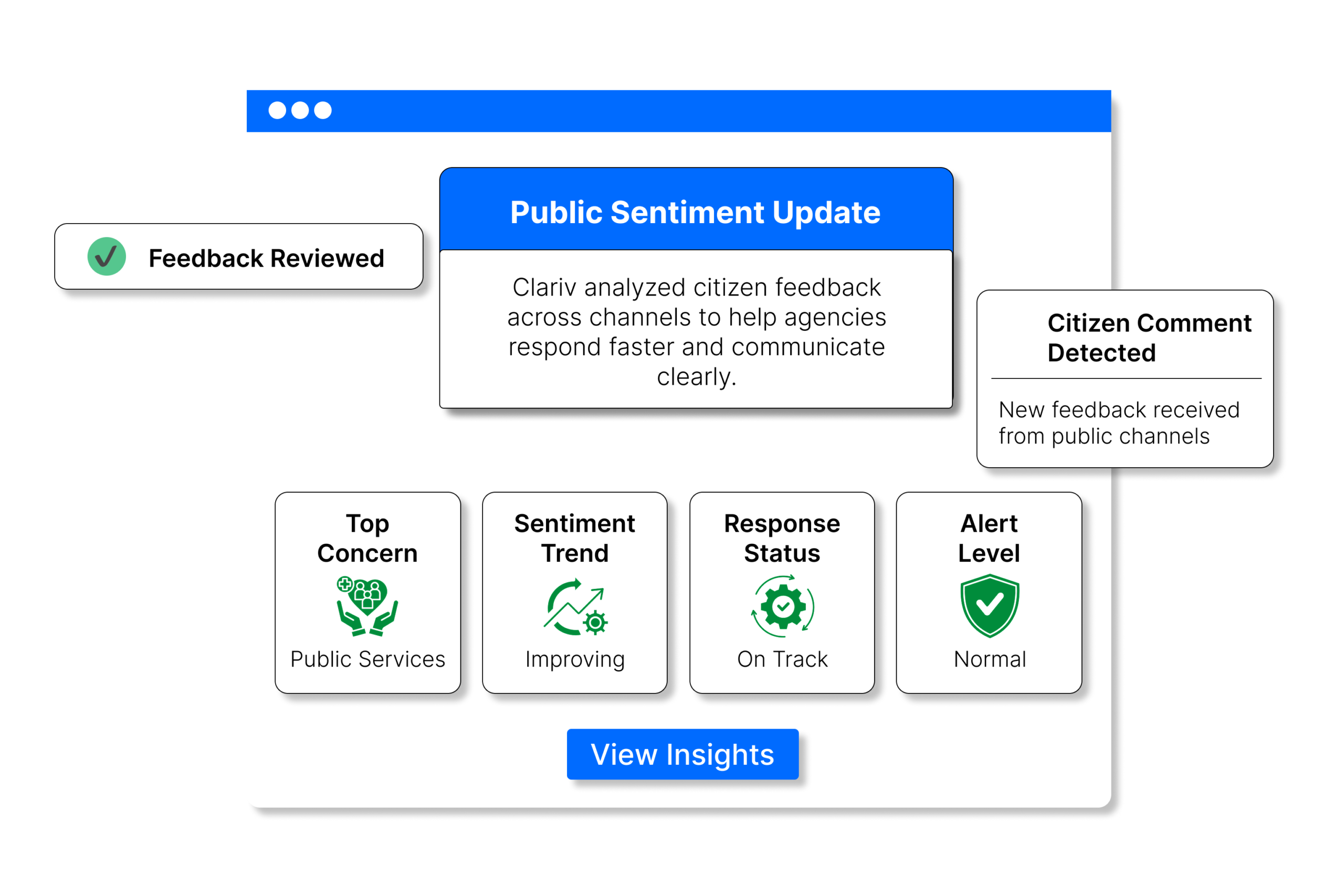
Clariv brings together customer sentiment analysis and community engagement insights to help government teams understand residents, respond faster, and communicate better.
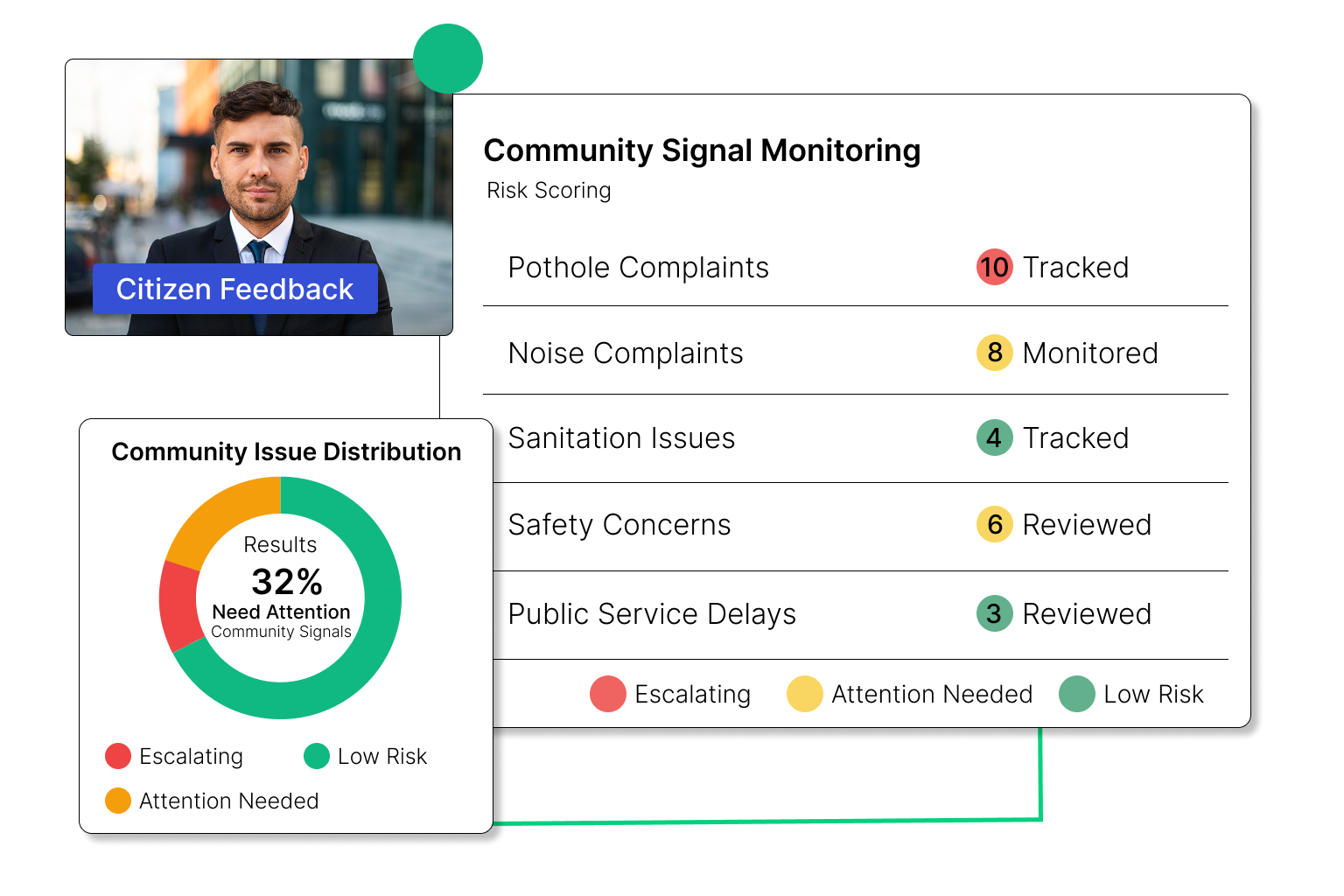
Bring all public feedback, complaints, comments, and social interactions into one place, so teams know exactly what’s happening across the community.

Real improvements in responsiveness, transparency, and service delivery without adding staff, juggling systems, or missing urgent community signals.
Because it helps agencies stay responsive, transparent, and coordinated without adding more tools, staff, or complexity.
Clariv reduces the time teams spend tracking reports, checking multiple inboxes, or manually routing complaints, so departments respond sooner and stay ahead of public dissatisfaction.
Track community feedback, coordinate responses, and engage residents consistently, even when multiple departments are involved or teams are stretched thin.
Clariv turns unstructured feedback into clear patterns, what residents are concerned about, which services need attention, and where issues are rising across districts.
When agencies respond quickly, communicate clearly, and act on real community insights, residents feel heard and confidence in government rises naturally, building trust and credibility.
Clariv helps public sector teams understand their communities, streamline communication, and manage constituent interactions with clarity and control without adding new hires or complicated tools.
Clariv consolidates all public input. service requests, web forms, emails, reviews, and social comments- so teams no longer track issues across scattered systems. Everything flows into one organized, secure command center.
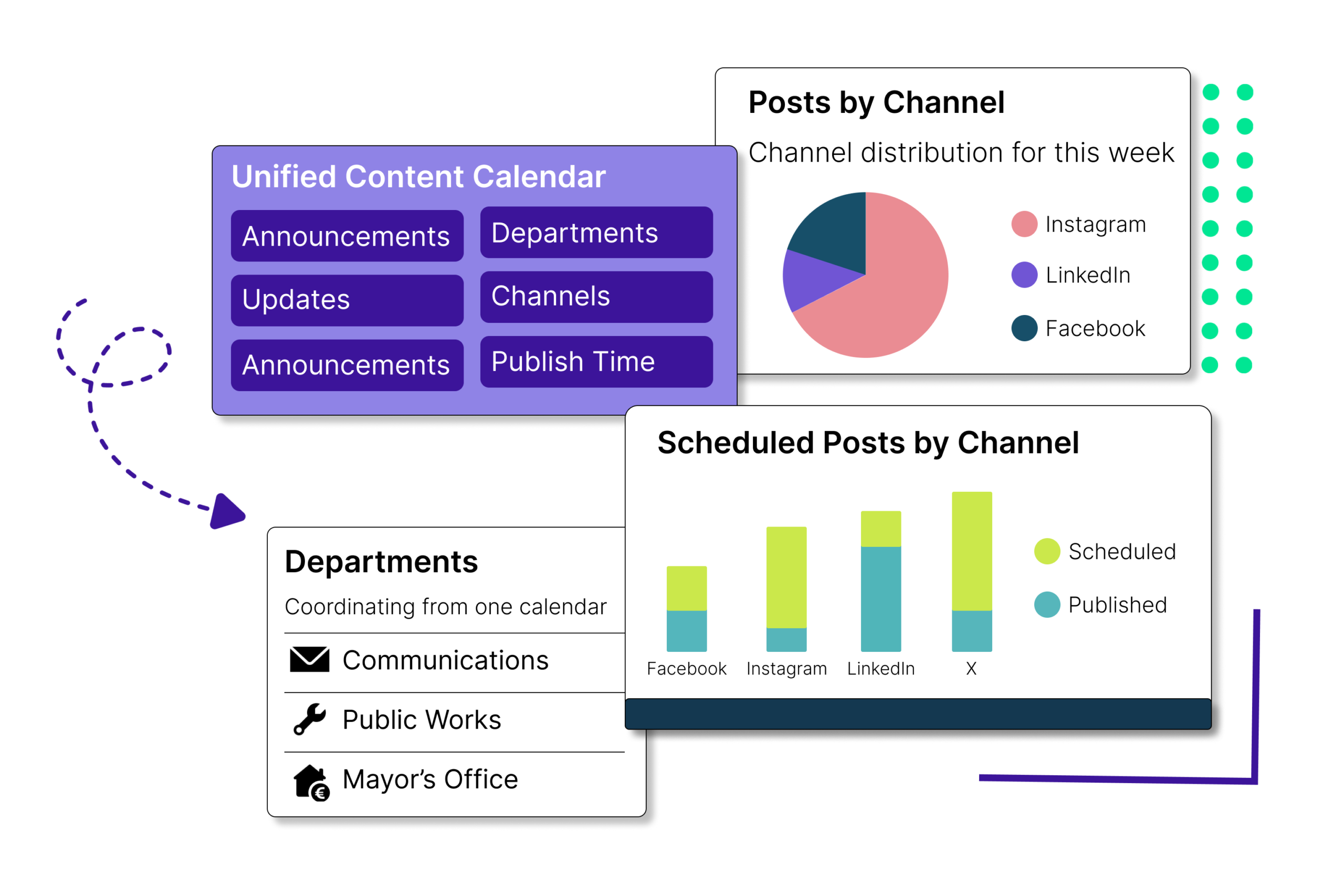
Bring resident comments, messages, reviews, and community feedback from multiple channels into one unified view. Departments can coordinate responses and maintain consistent public engagement without switching between platforms.
Advanced AI scans conversations across every channel to uncover emerging concerns, shifting public sentiment, and recurring service issues. Agencies get a clear understanding of how residents feel across districts and programs.


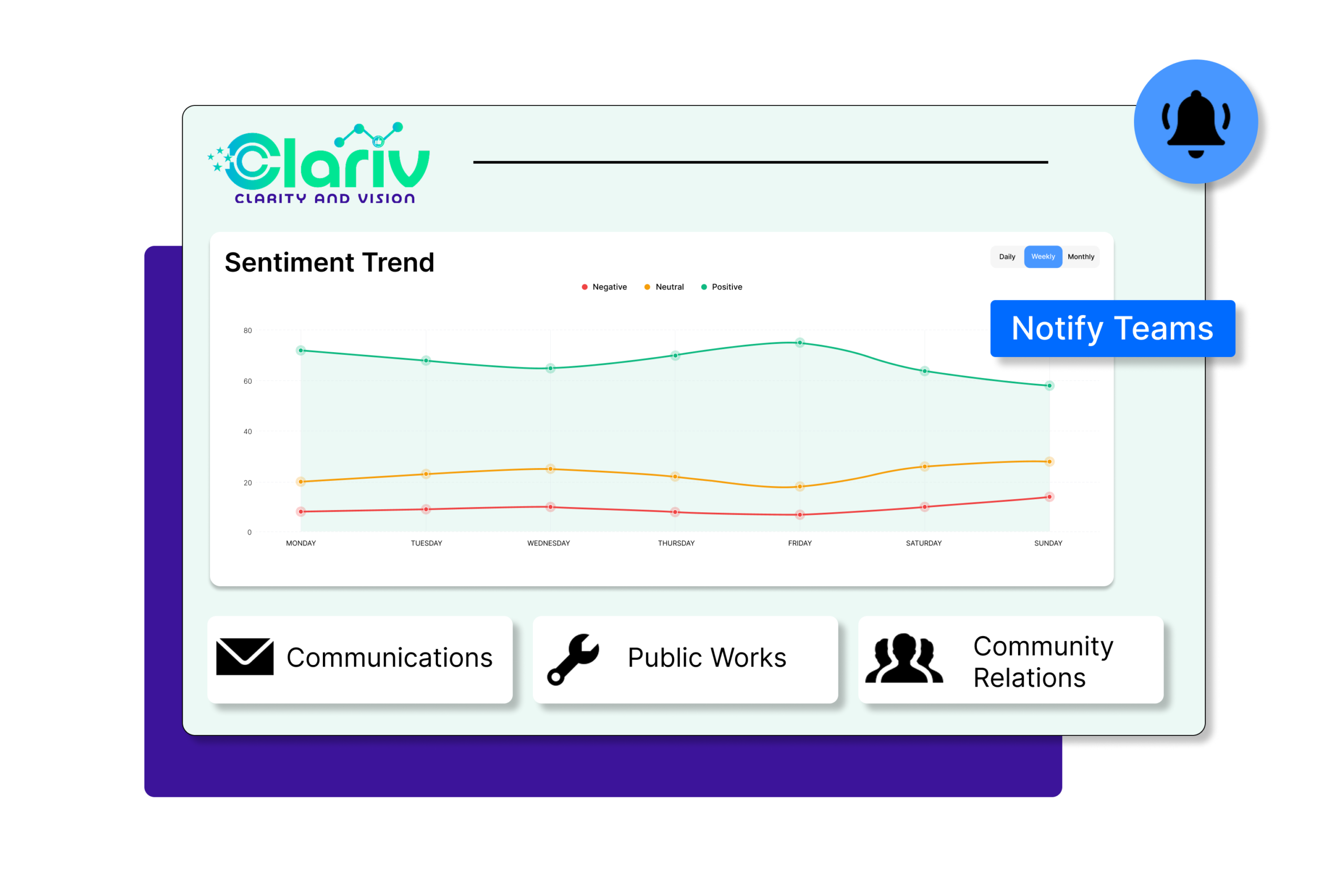


When complaints rise, frustration builds, or patterns emerge, Clariv alerts the right departments instantly. Teams act before concerns escalate or trust declines.
Clariv visualizes public sentiment, trending issues, service gaps, and engagement patterns, making it easy for leaders to prioritize action and allocate resources effectively across districts.
Clariv’s AI assists with categorization, routing, drafting responses, and identifying next steps, helping stretched teams maintain high responsiveness without additional staffing.
A no-stress setup that helps government teams understand community needs and communicate consistently across every channel.
Integrate Clariv with 311 systems, Google reviews, web forms, kiosk surveys, department emails, and major social platforms. Everything flows into one secure dashboard without IT complexity or extra tools.
AI reads what residents are saying, detects emotion, and categorizes topics, public safety, sanitation, transit delays, service gaps, district concerns, policy confusion, and more. You instantly see where attention is needed.
Use Clariv's customer sentiment insights to identify community concerns, prioritize responses, and coordinate resident engagement across departments. Communication stays timely, consistent, and informed by real feedback.
311 requests, social DMs, comments, emails, and web messages appear in one unified inbox. Teams get real-time alerts, faster response workflows, and smart reply suggestions so nothing gets overlooked.
Clariv shows what residents appreciate, what they’re frustrated about, and where issues are rising across districts or departments. Live dashboards reveal problem areas and prioritize what needs to be fixed.
Clariv learns from ongoing patterns and suggests next steps, what issue requires escalation, what needs communication, where delays are happening, and how agencies can improve response times. Teams stay proactive instead of reactive.